Pork Stew
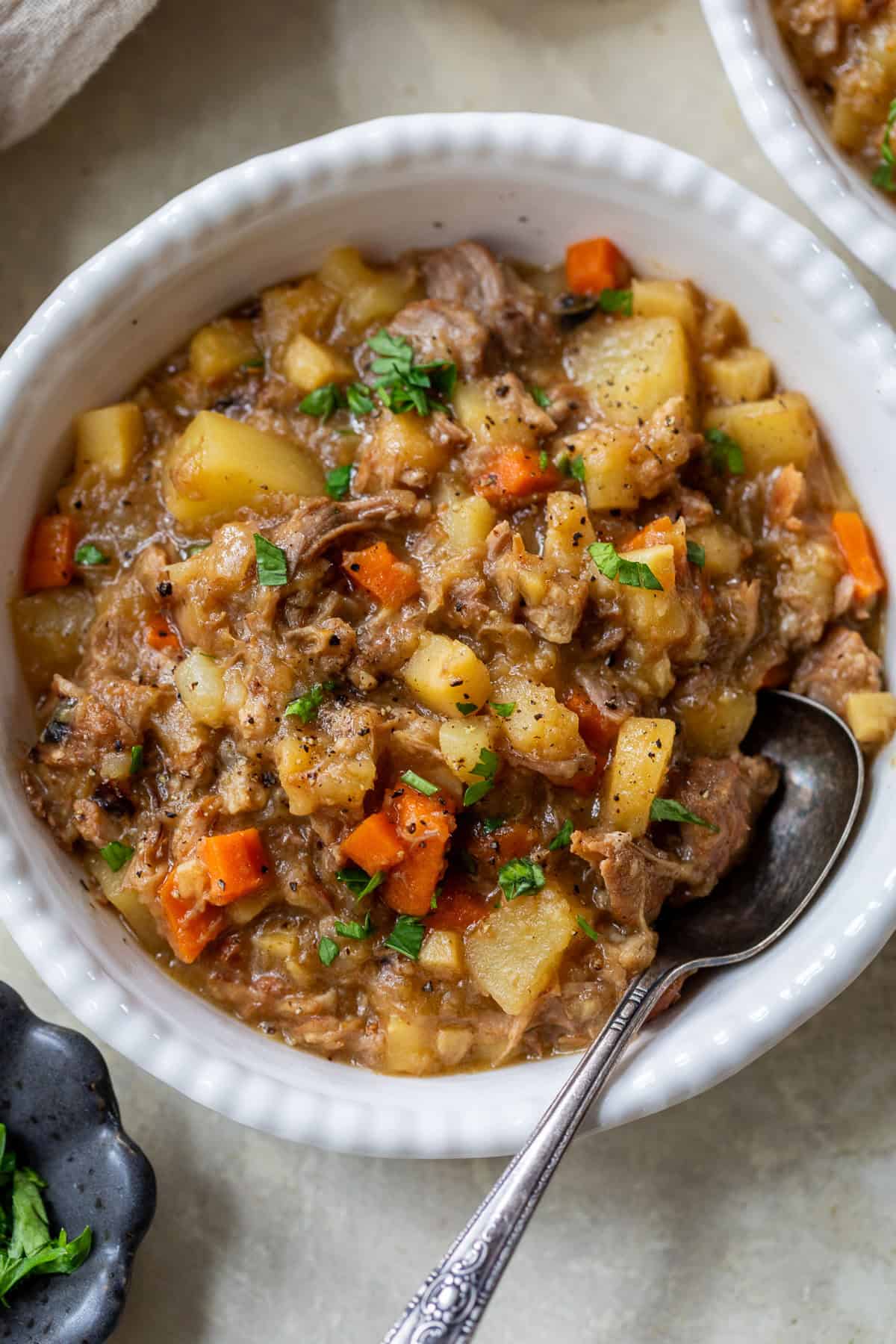
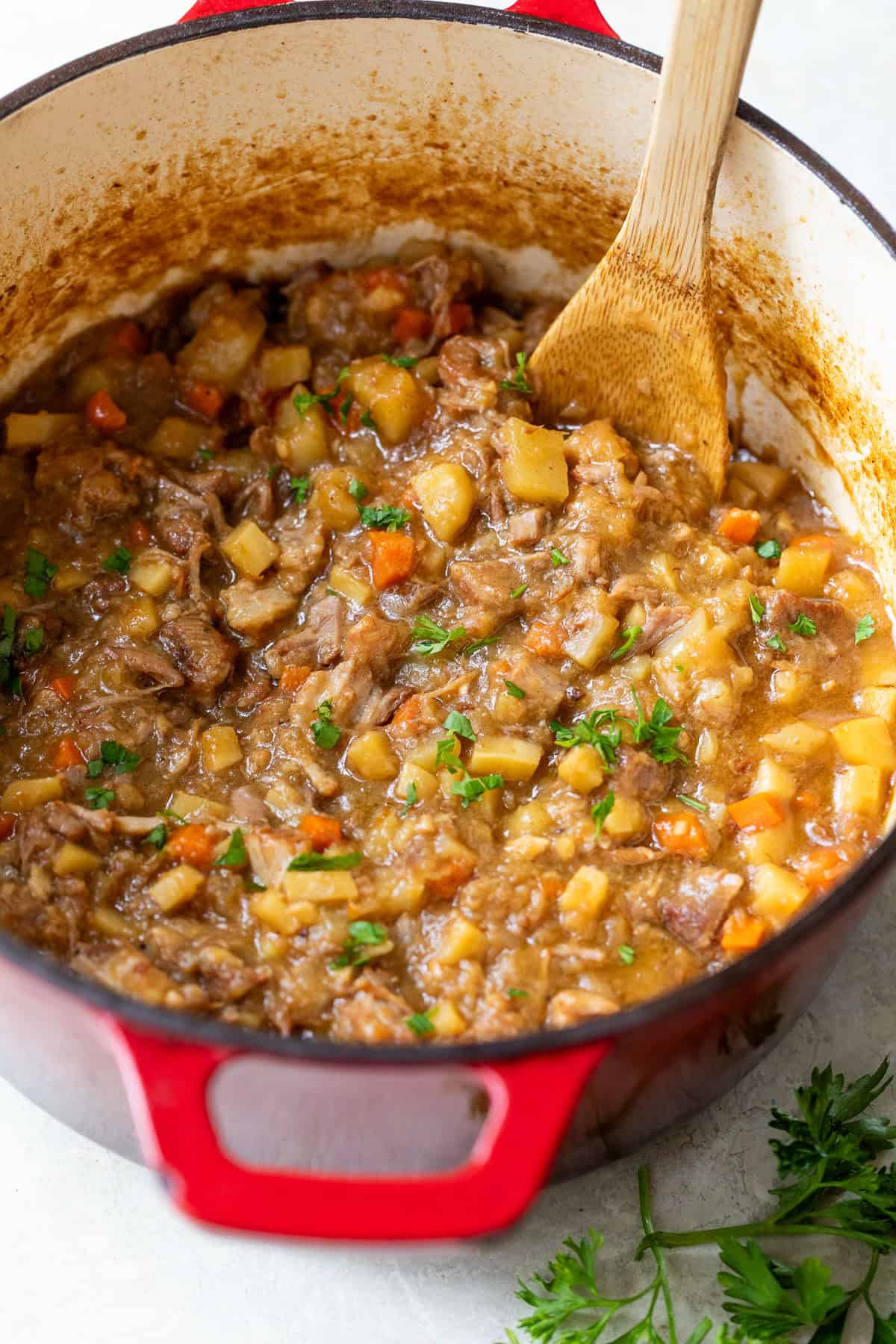
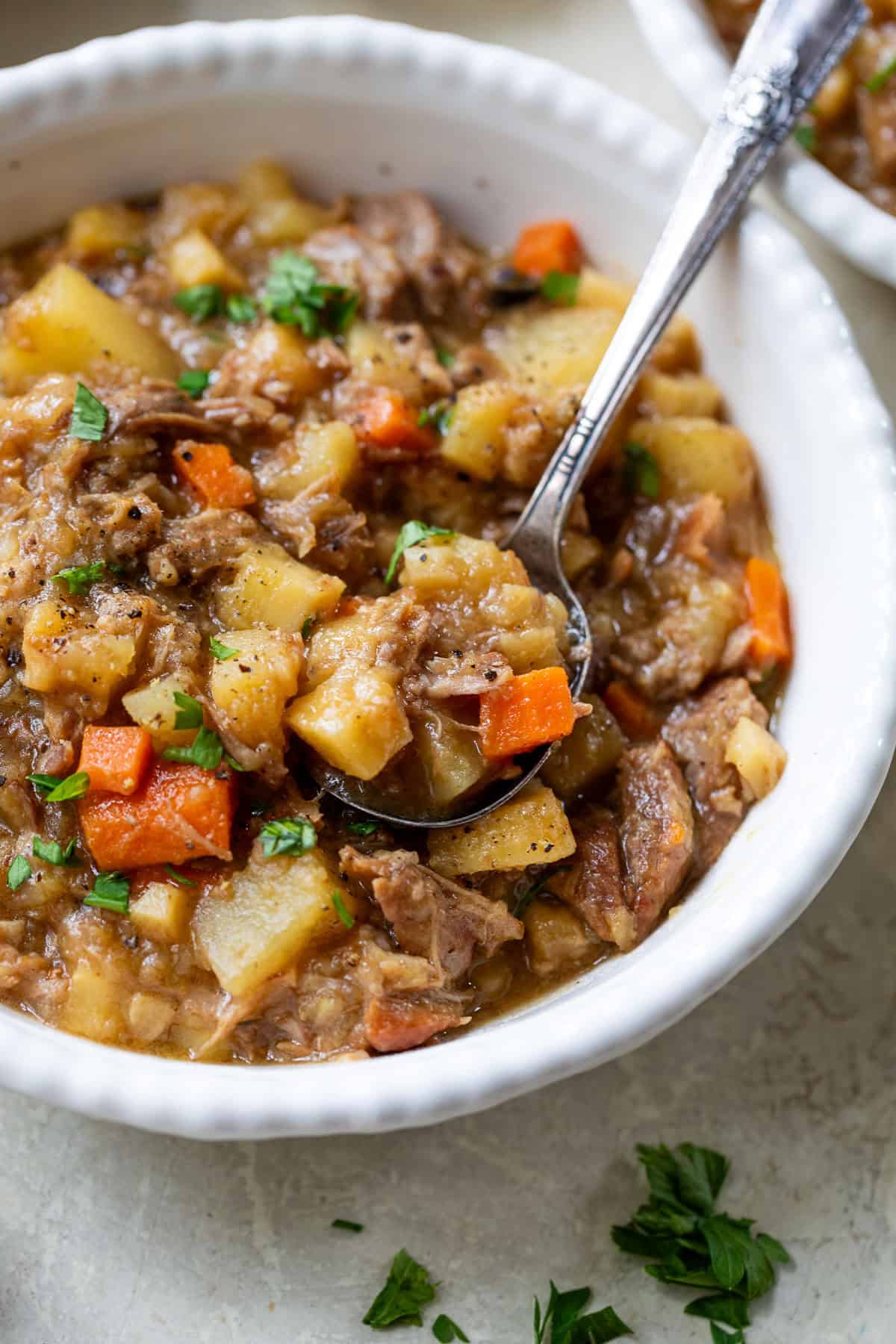
Rustic and hearty, this Pork Stew is the kind of meal that sticks to your ribs! With tender chunks of pork shoulder, potatoes, carrots, parsnips and a rich broth with cider, sage and a hint of cinnamon, it’s the perfect dinner for a chilly evening.
Move over beef, I’m all about pork stew now!

As a recipe developer, there is a constant rotation of new and in-progress recipes in my kitchen. While they’re all good (I wouldn’t post them if they weren’t!), some steal my heart a little more than the others. And this pork stew is one of those.
Originally, I’d planned to simply swap in pork for the beef in my Beef Stew, but the more I thought about it, the more I realized I was missing out on a chance to pair pork with one of its greatest complements: apples! (As seen in my Pork Chops With Apples recipe.)
I started by swapping the red wine for a dry cider (this needs to be alcoholic and DRY—no Redd’s). Rather than add a pinch of sugar or honey to offset the acid in the stew, I grated an apple, which dissolves into the broth.
Let’s talk about what makes it a standout:
- A Complete Meal. With pork, potatoes, carrots and parsnips, you don’t need much else for dinner. (Although a thick piece of crusty No Knead Bread is a welcome addition—you can’t let any of that broth go to waste!)
- Potatoes Make It Thick and Hearty. A quick mash at the end breaks down some of the potatoes, giving the broth more body without needing additional flour, cornstarch, or cream.
- Leftovers Worth Looking Forward To. The flavors continue to mingle and the broth thickens as the stew chills in the fridge, making for leftovers that don’t disappoint.
Ingredients and Substitutions
You’ll find the full list of ingredients in the recipe card below, but here are some notes to keep in mind.
- Pork Shoulder. Also sold as pork butt. Cut it into 1 1/2-inch chunks so the pieces are substantial enough to withstand the long simmer.
- All-Purpose Flour. A light coating helps the pork brown when seared in the pot.
- Kosher Salt and Black Pepper. To season the pork before browning.
- Canola Oil. Or another neutral oil you like to use for cooking.
- Yellow Onions and Garlic. These build the backbone of flavor for the broth, adding savoriness with just a touch of sweetness.
- Granny Smith Apple. Grating the apple allows it to practically disappear into the broth, adding subtle sweetness and acidity.
- Apple Cider Vinegar. Brightens the stew and balances the richness of the pork.
- Dry Hard Cider. Gives the broth a subtle apple flavor that pairs well with pork and sage. Dry white wine is another option.
- Reduced-Sodium Chicken Broth. Using reduced-sodium broth gives you better control over the seasoning as the liquid reduces.
- Worcestershire Sauce. A small amount adds umami depth.
- Dried Sage. Pork, apples, and sage are a classic combination. Thyme or rosemary would also work if you’d like to try something different.
- Bay Leaves. Add background herbal flavor during the long simmer.
- Cinnamon Stick. The cinnamon stick is very subtle. Use a whole stick to bump it up or you can omit it entirely. Don’t swap in ground cinnamon—it would be too much flavor-wise and you’d run the risk of your pork stew tasting like dessert!
- Carrots and Parsnips. I love the sweetness of parsnips in this stew, but if you’re not a fan, simply use all carrots instead.
- Russet Potatoes. Once tender, some of the potatoes can be mashed directly into the stew to thicken the broth.
- Dijon Mustard. Dijon adds a little tang to brighten things up.
- Fresh Parsley or Sage. A sprinkle of fresh herbs gives the finished stew a pop of freshness and color.
Step-By-Step Instructions
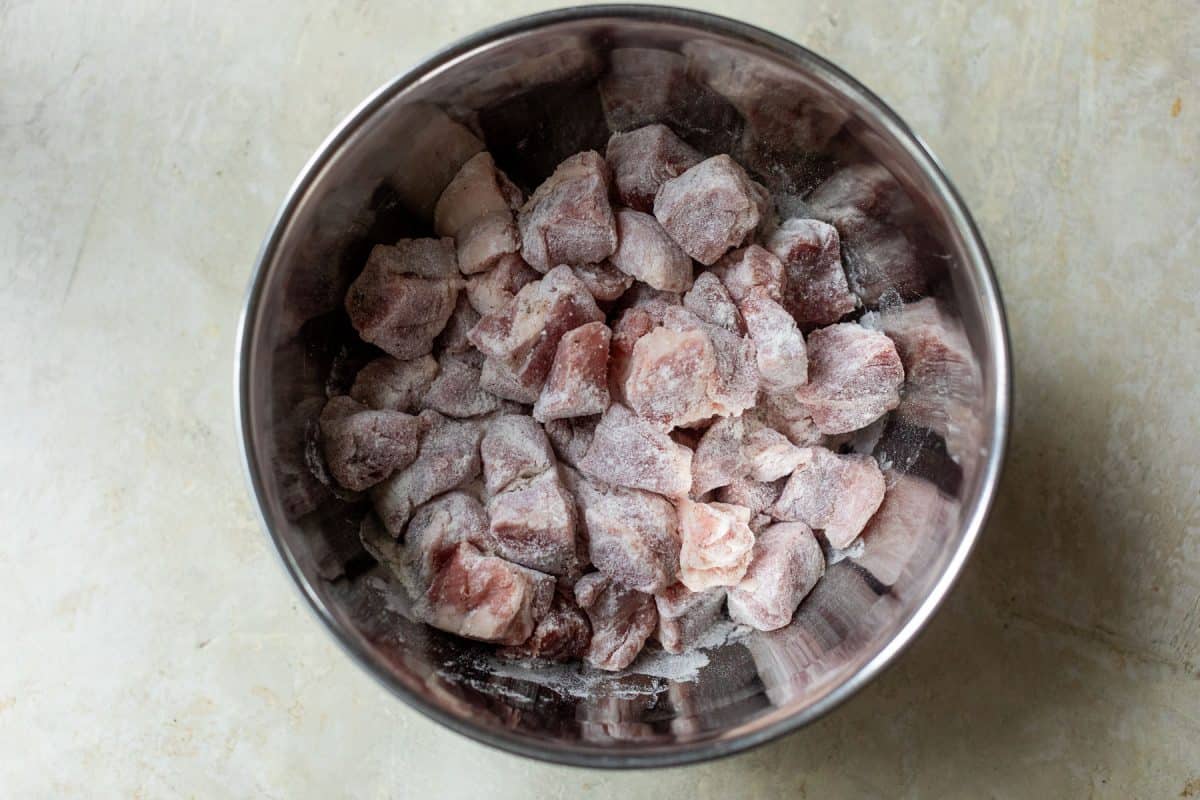
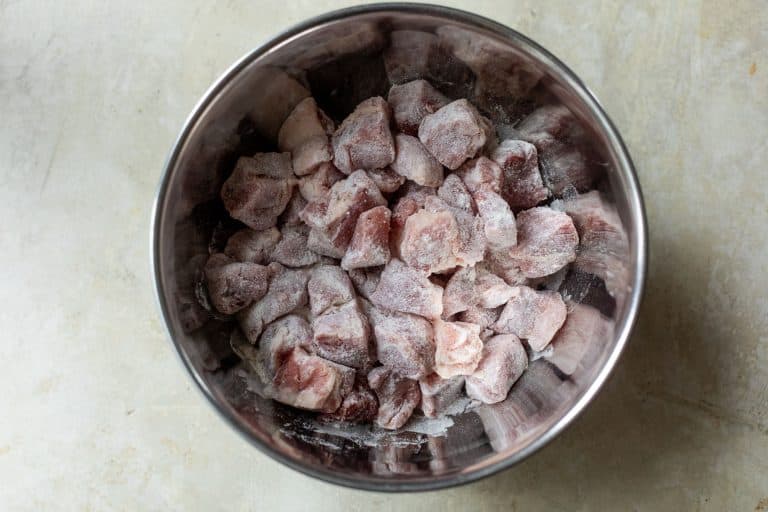
Season the Pork (photo 1). Place the pork chunks in a large bowl. Add the flour, salt, and black pepper, then toss until every piece is evenly (but lightly!) coated.
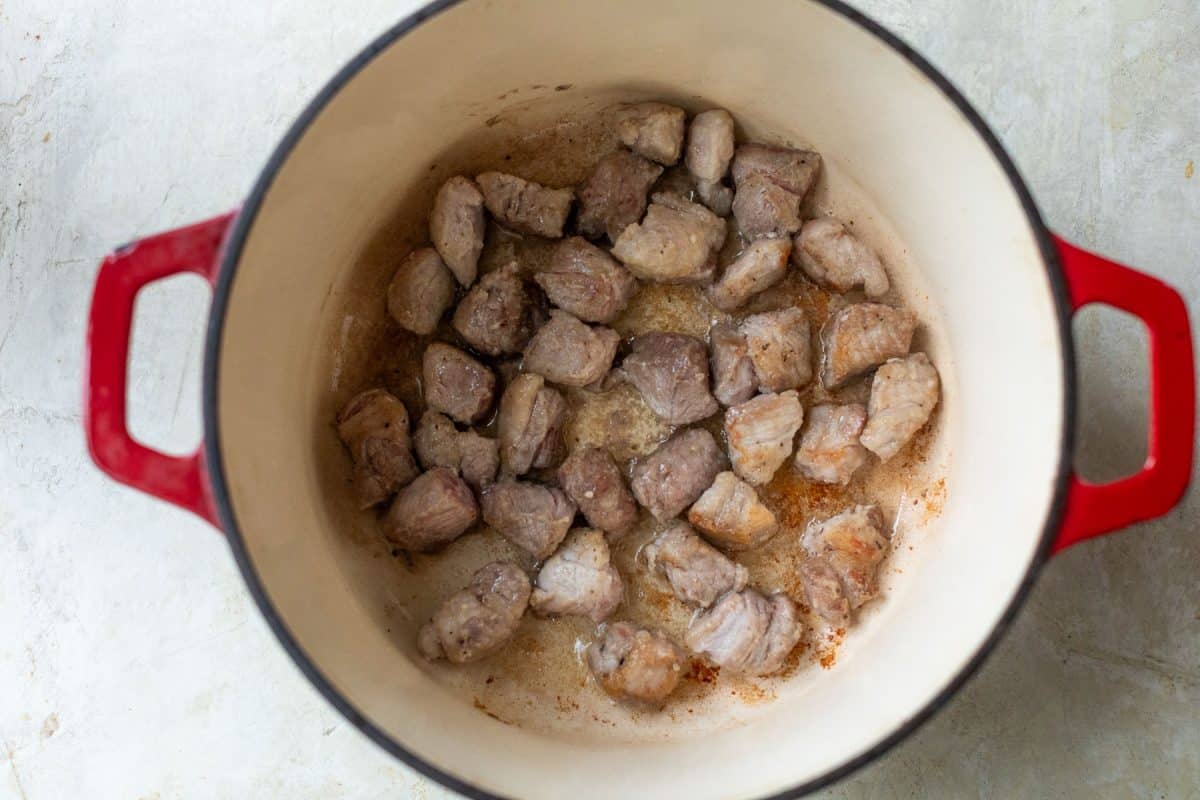
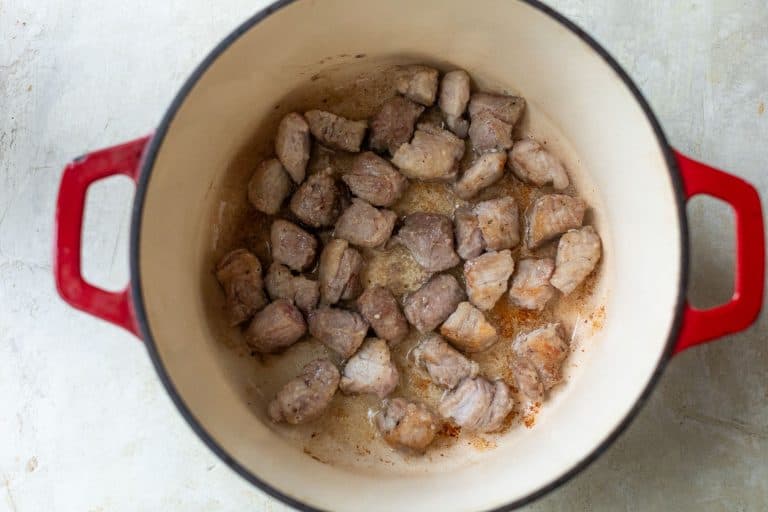
Brown the Pork in Batches (photo 2). Heat a Dutch oven or large soup pot over medium heat. Add 1 tablespoon of the oil and let it warm for about 30 seconds. Arrange half of the pork in a single layer and cook undisturbed for 3 minutes, until the bottom is golden. Then, turn and brown the other side. Transfer to a plate and repeat with the remaining oil and pork.
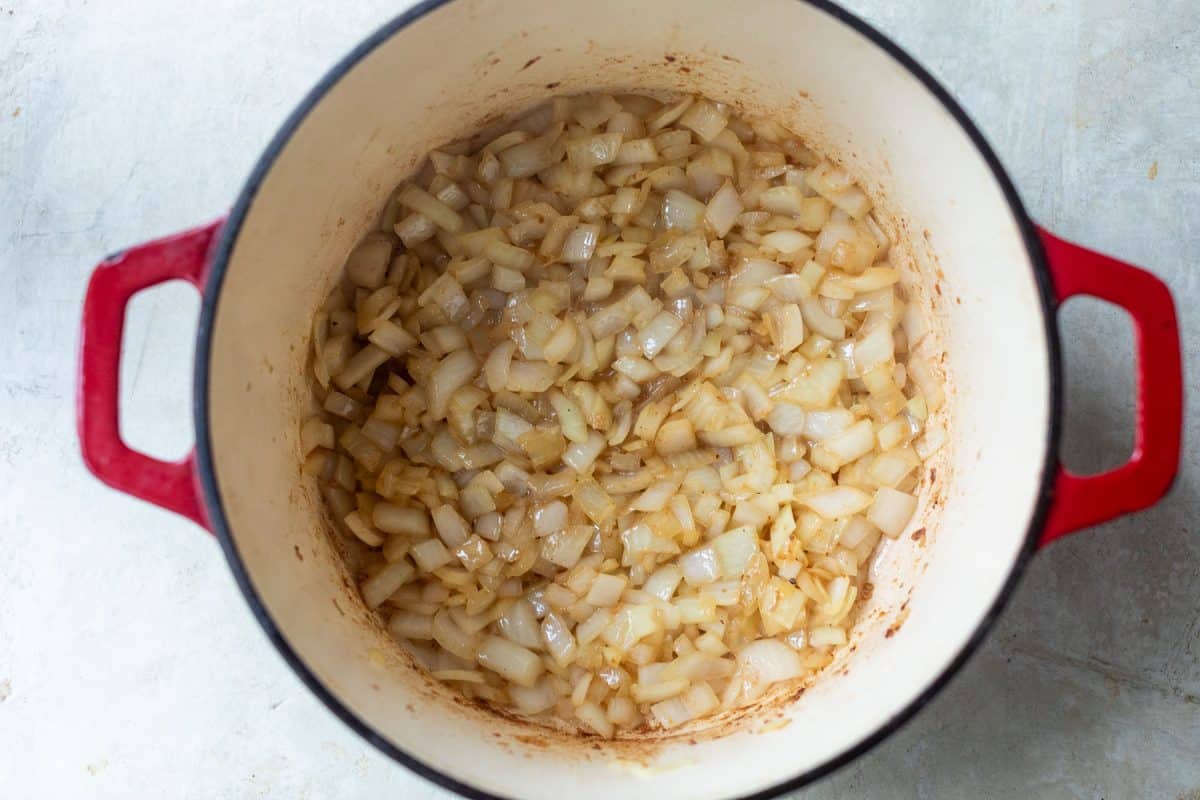
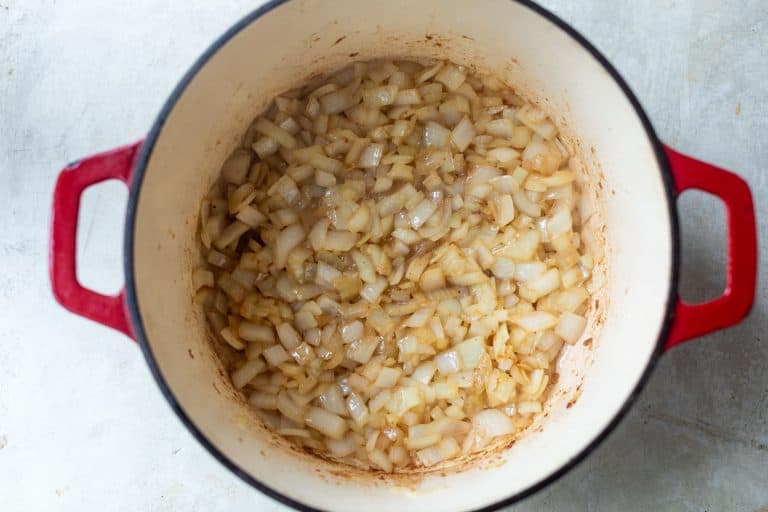
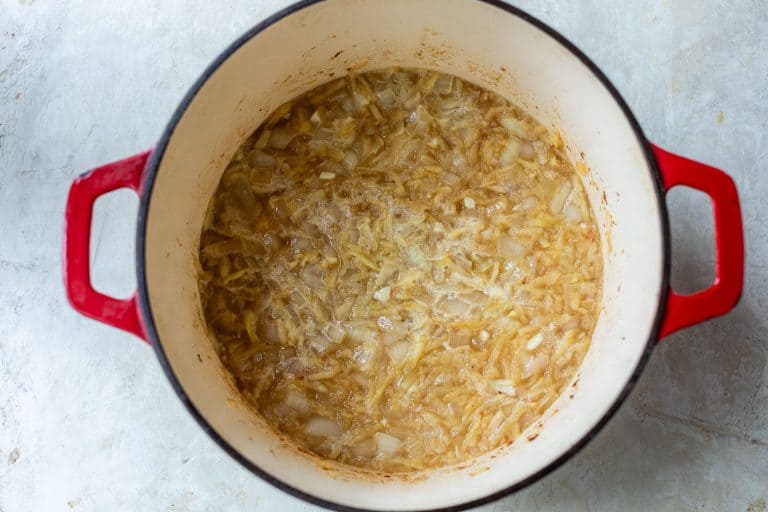
Cook the Onions (photo 3). Reduce the heat to medium-low. Add the diced onions and cook for about 10 minutes, stirring occasionally and scraping the bottom of the pot.
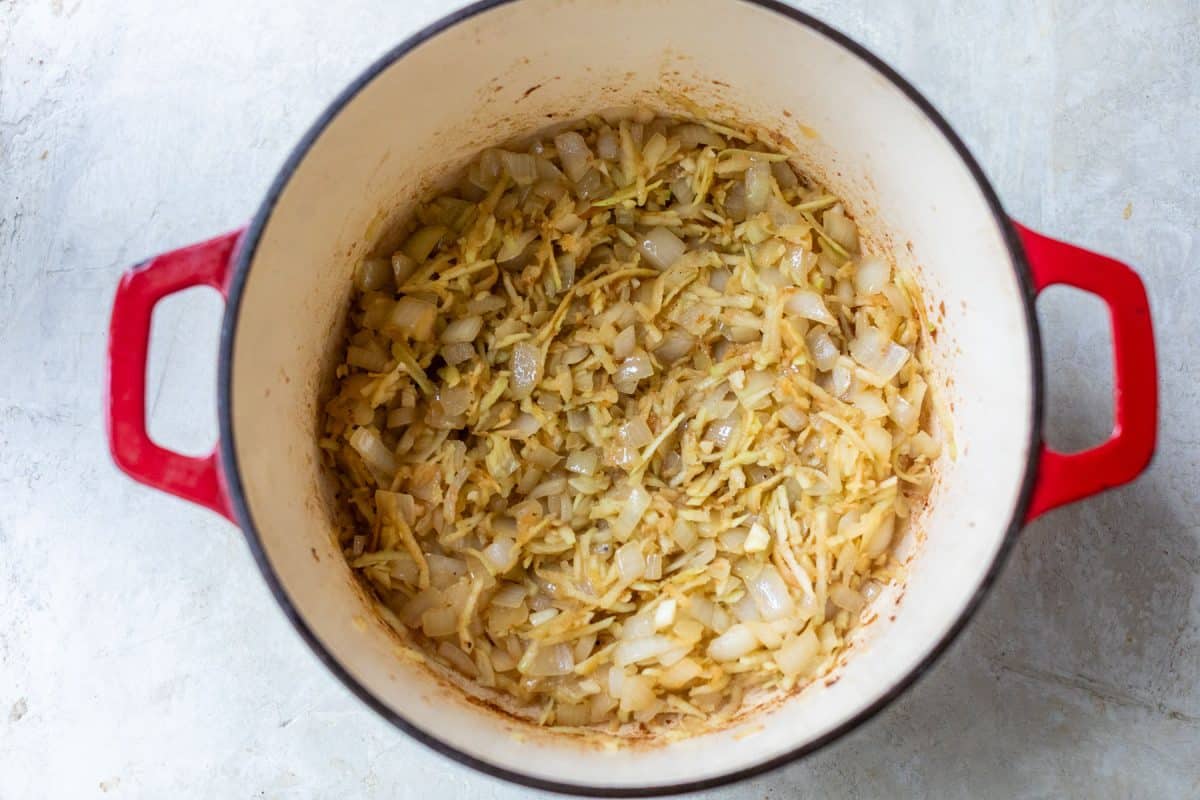
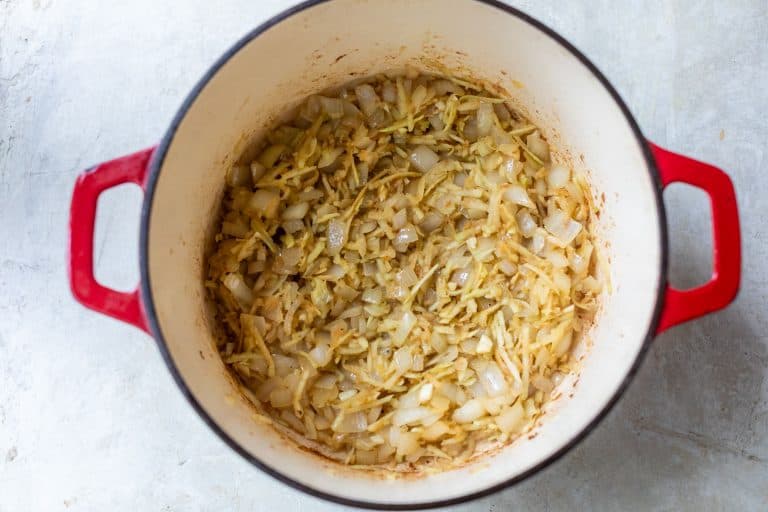
Add the Apple and Garlic (photo 4). Stir the grated apple and garlic into the onions. Cook for about 30 seconds, just until fragrant.
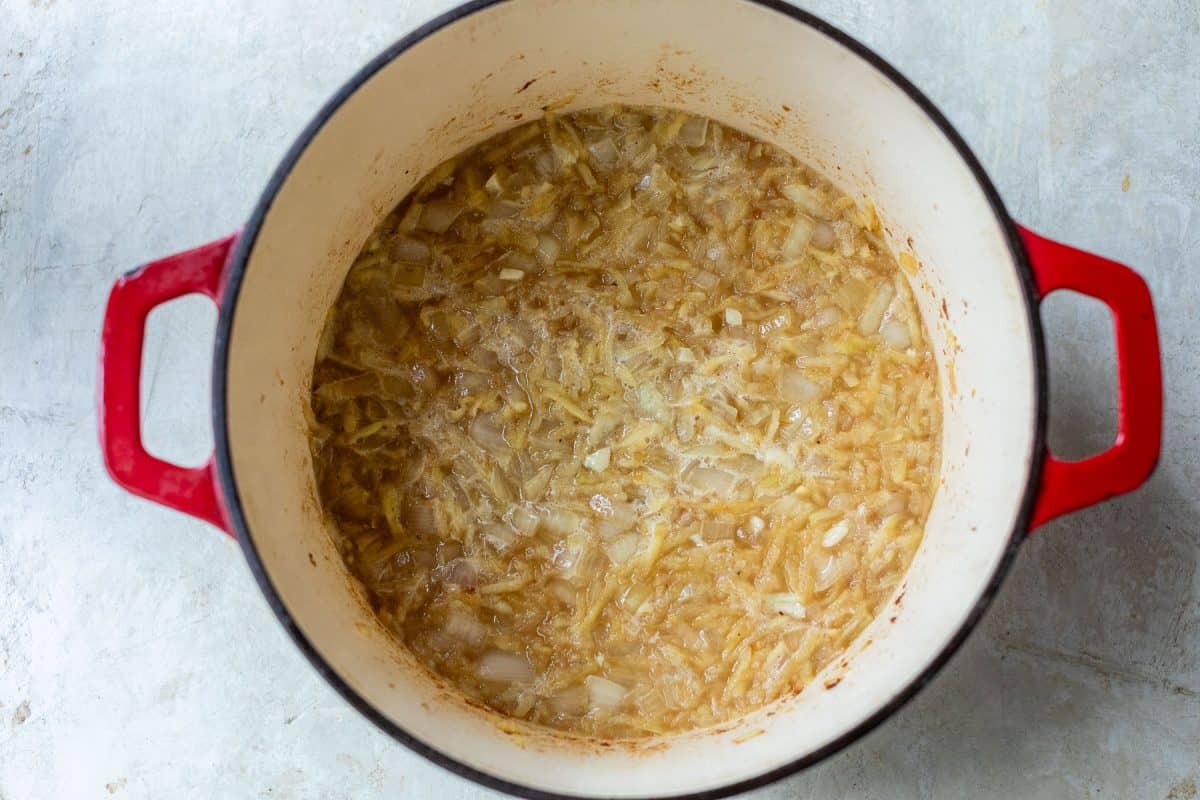
Deglaze the Pot (photo 5). Pour in the hard cider and apple cider vinegar. Bring to a simmer, scraping the bottom of the pot with a wooden spoon or spatula to release the browned bits left behind by the pork. Let the liquid simmer for 2 minutes to reduce slightly.
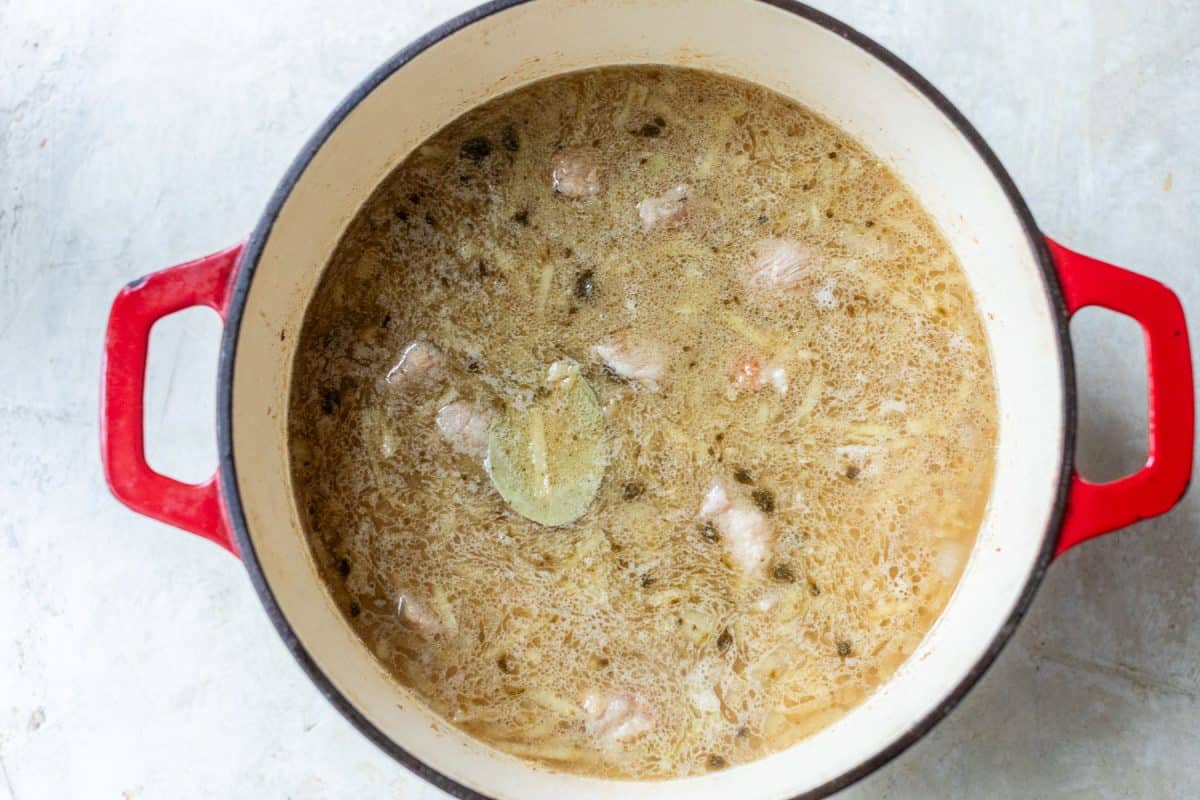
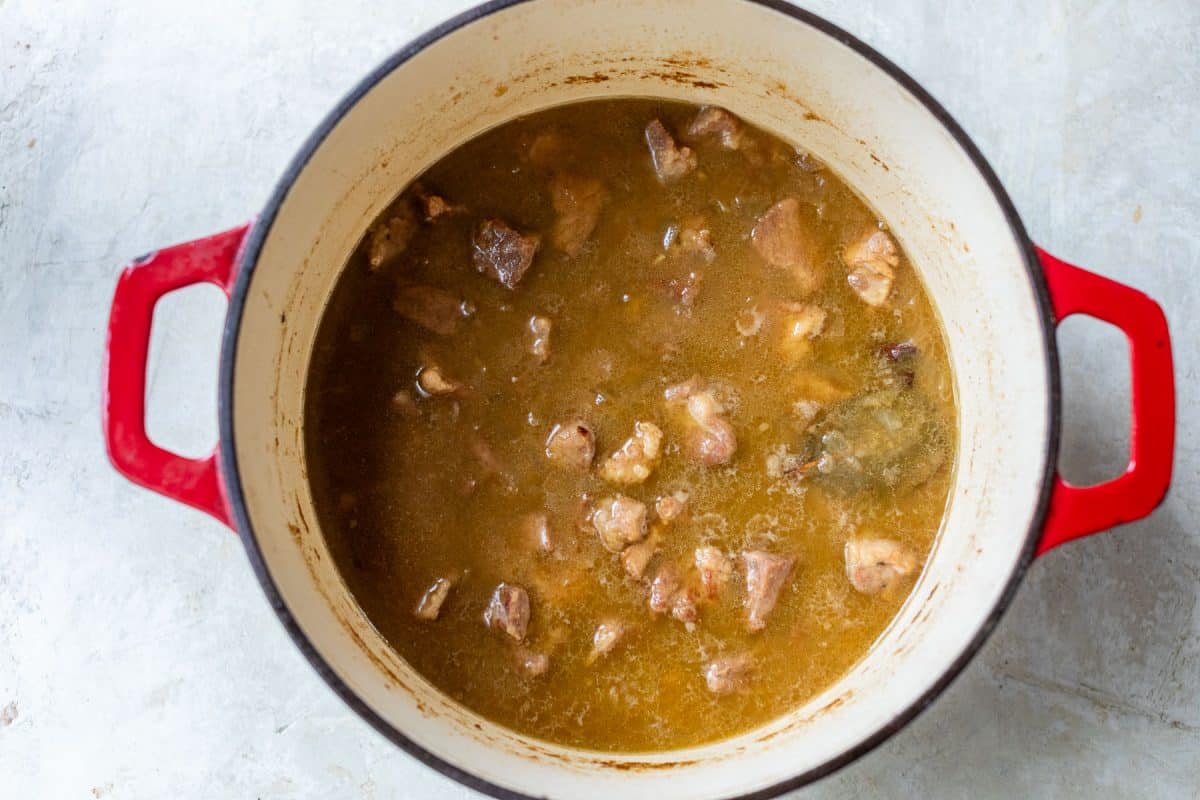
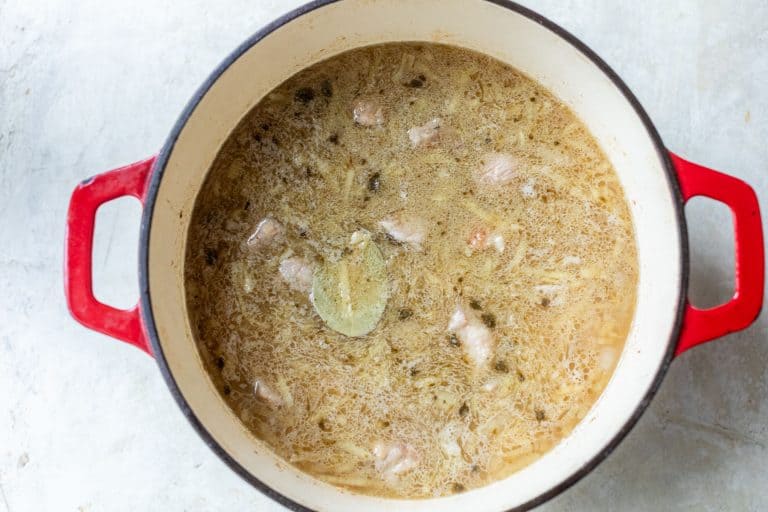
Simmer the Pork (photo 6). Return the pork and any accumulated juices to the pot. Add the broth, Worcestershire sauce, sage, bay leaves, and cinnamon stick. Bring to a boil, then reduce the heat to low. Partially cover and simmer gently for 90 minutes (photo 7), stirring occasionally.
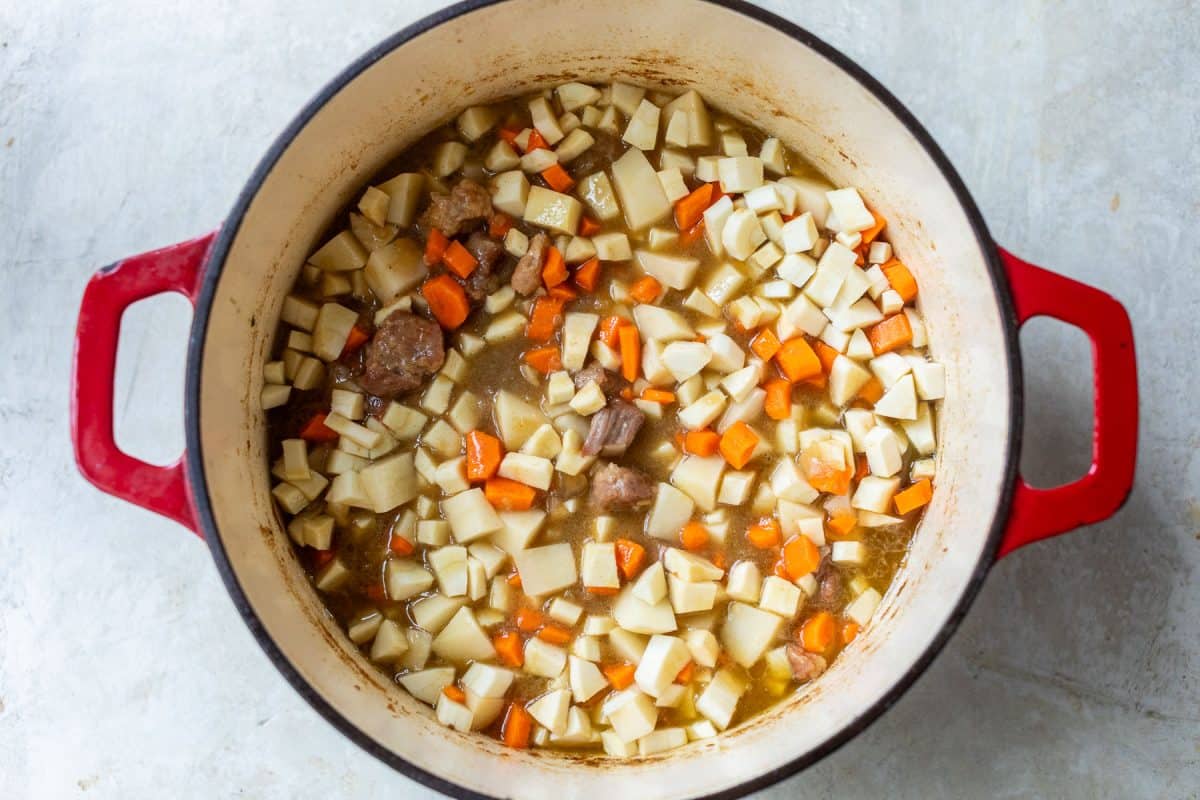
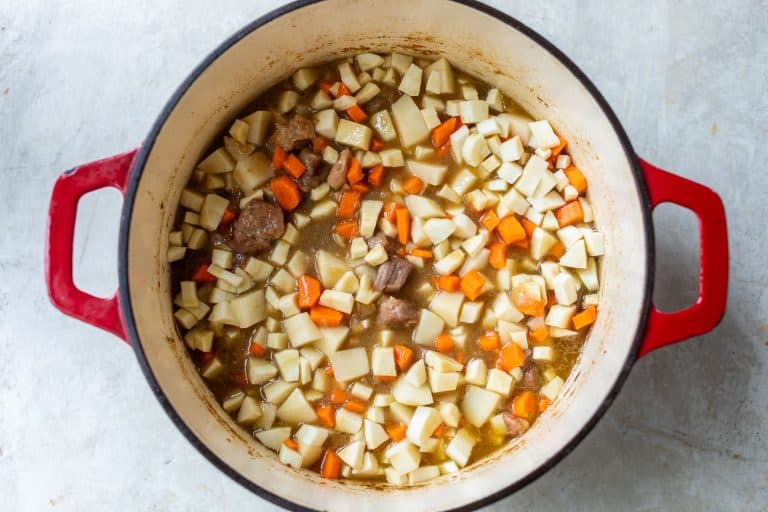
Add the Vegetables (photo 8). After the pork has simmered for 90 minutes, stir in the vegetables. Cover the pot partway and continue simmering for 45 minutes to 1 hour, until the vegetables are tender. Stir occasionally and add more water if needed.
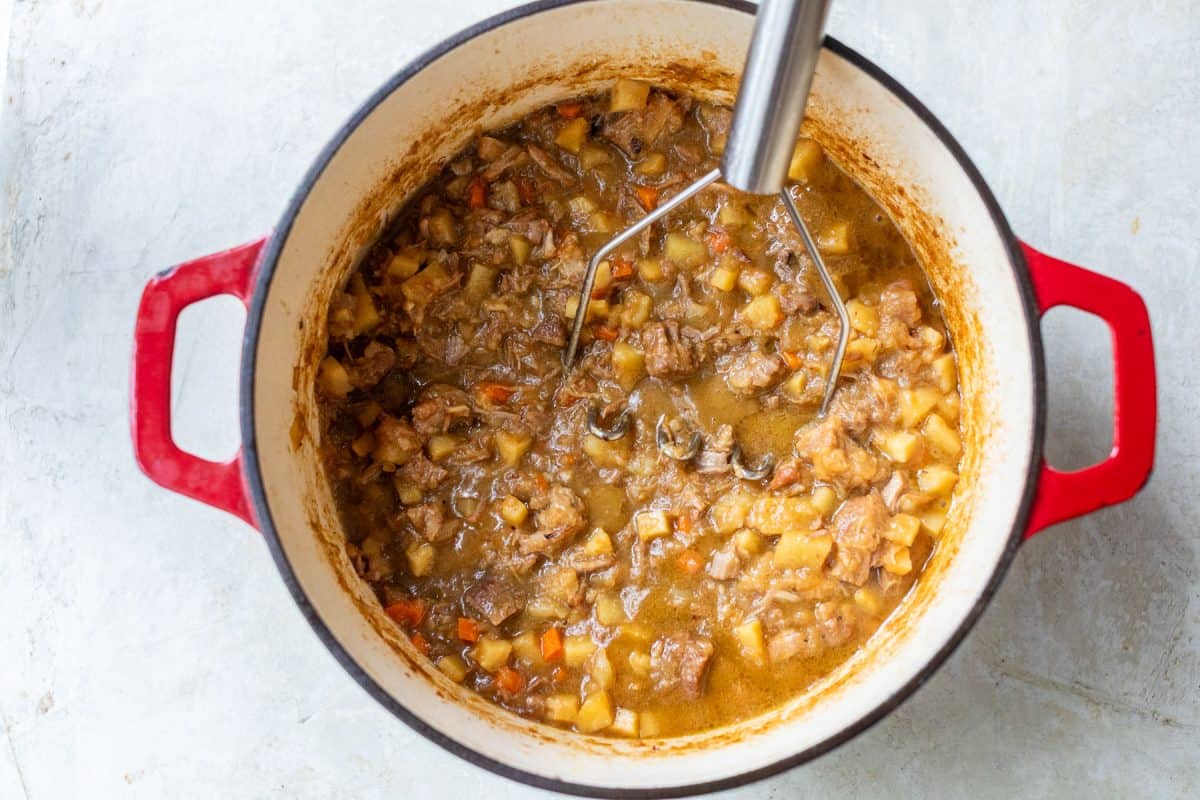
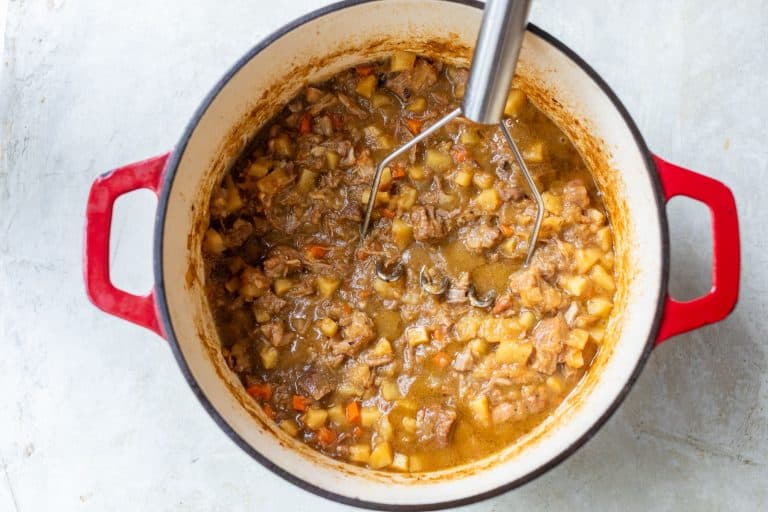
Finish (photo 9). Remove and discard the bay leaves and cinnamon stick. Stir in the Dijon mustard and cook for another 2 minutes. Then, using a potato masher, gently mash the stew a few times. This thickens the broth slightly while leaving plenty of chunks. Taste and adjust the salt, pepper, and Dijon mustard. Ladle into bowls and finish with chopped fresh parsley or sage. ENJOY!
What to Serve With Pork Stew
- Bread. Homemade Dinner Rolls are perfect for sopping up the broth, as is this Rosemary Olive Oil Bread.
- Salad. A fall salad like my Pear Salad would be perfection!
- Grains. Serve the stew over or alongside hearty farro or wheat berries.

Pork Stew
Ingredients
- 2 ½ pounds boneless pork shoulder also sold as pork butt, cut into 1 ½-inch chunks
- ¼ cup all-purpose flour
- 2 teaspoons kosher salt
- 1 teaspoon ground black pepper
- 2 tablespoons canola oil or grapeseed or another neutral cooking oil
- 2 yellow onions
- 4 cloves garlic
- 1 medium Granny Smith apple
- 2 tablespoons apple cider vinegar
- 1 ½ cups dry hard cider or dry white wine such as Sauvignon Blanc (see notes to use non-alcoholic apple cider)
- 6 cups reduced-sodium chicken broth
- 1 teaspoon Worcestershire sauce
- 1 teaspoon dried sage
- 2 bay leaves
- ½ cinnamon stick
- 3 medium carrots peeled and ½-inch diced
- 3 parsnips peeled and ½-inch diced
- 2 russet potatoes peeled and ½-inch diced
- 1 tablespoon Dijon mustard plus more to taste
- Water as needed
- Chopped fresh parsley or sage for serving
Instructions
- Place the pork in a large bowl and toss with the flour, salt, and pepper until coated on all sides.
- Heat a Dutch oven or similar large soup pot over medium. Once hot, add 1 tablespoon of the oil and let warm about 30 seconds. Add half of the pork in a single layer (the pieces should barely touch). Let it cook undisturbed for 3 minutes until lightly browned on the first side, then flip and brown on the other side. Remove to a plate. Repeat with the remaining 1 tablespoon oil and remaining pork.
- While the pork sears, chop the onion into 1/2-inch pieces.
- Once all of the pork is browned and removed to a plate, reduce the heat to medium-low. Add the onion and cook, stirring periodically and scraping the bottom, until softened and browned at the edges, about 10 minutes.
- While the onion browns, peel the apple and grate on a coarse box grater. Smash the garlic, then peel and roughly chop.
- Once the onions are browned, stir in the garlic and apple and cook just until fragrant, about 30 seconds.
- Add the hard cider and apple cider vinegar and bring to a simmer. With a rubber spatula or wooden spoon, scrape up any bits stuck to the bottom of the pot. Let simmer 2 minutes to reduce slightly.
- Return the pork and any juices that have collected on the plate to the pot. Stir in the chicken broth, Worcestershire, sage, bay leaves, and cinnamon stick. Bring to a boil over high heat, then reduce to a simmer over low. Cover, leaving the lid just slightly ajar, and simmer for 90 minutes. Lift the lid and stir periodically to ensure nothing is sticking. The liquid will noticeably reduce.
- While the pork simmers, peel the carrots, parsnips, and potatoes. Cut each into 1/2-inch cubes. Once the pork has been simmering 90 minutes, stir them in. Cover the pot partway and simmer 45 minutes to 1 hour more, until the vegetables are tender. Stir from time to time to prevent sticking, and if at any point the stew is thicker than you would like, add water as needed (I added about a cup but it's also VERY dry where I live).
- Fish out and discard the bay leaves and cinnamon stick. Stir in the Dijon and let cook 2 minutes. With a potato masher, lightly mash the stew a bit. This will break up a few of the potatoes to slightly thicken the broth and also give you smaller bits of pork mixed in with the larger. Taste and adjust the salt, pepper, and mustard as desired. Serve hot with parsley or sage sprinkled over the top.
Notes
- TO STORE: Refrigerate leftover pork stew in an airtight container for up to 4 days. I don’t recommend freezing this recipe; potatoes tend to get mealy after freezing and thawing.
- TO REHEAT: Warm gently on the stovetop over medium-low heat, stirring occasionally. Add a splash of broth or water if it has thickened in the refrigerator.
- Because regular apple cider is sweeter than dry hard cider, I’d start with a mixture of 3/4 cup apple cider and 3/4 cup additional chicken broth in place of the 1 1/2 cups hard cider. Taste the finished stew and add a little extra apple cider vinegar or Dijon if it needs more acidity.
Nutrition
Related Recipes


from Well Plated by Erin Clarke https://ift.tt/kcn7IUO
Comments
Post a Comment